
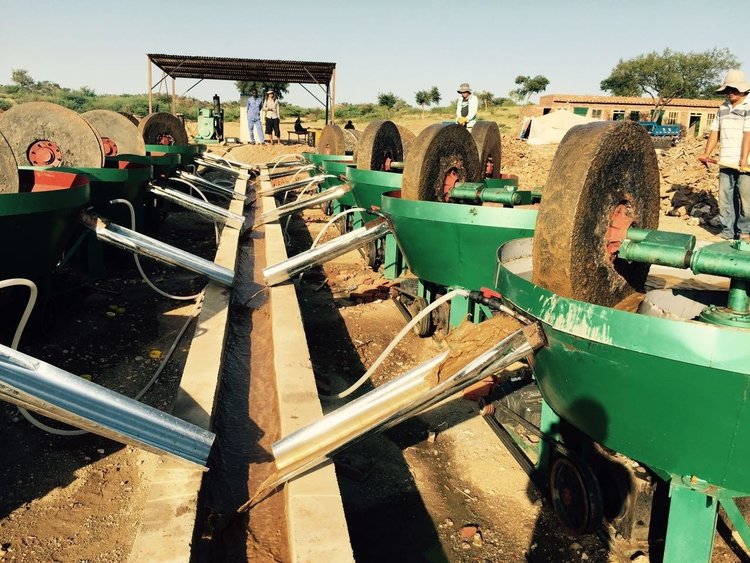
A wet pan mill is a compact grinding machine used in some gold ore processing circuits, particularly where the target is fine liberation ahead of gravity concentration or further recovery. It is not a universal replacement for every ball mill or rod mill, so the process duty should be defined before selecting the machine.
Where A Wet Pan Mill Fits
Wet pan mills are commonly considered for smaller gold projects where the feed has already been crushed, the required throughput is moderate and a simple, accessible grinding circuit is valuable. The machine uses heavy wheels running in a circular pan with water and ore to break and grind the material.
The decision should be based on the ore response, required product fineness, downstream recovery method and the availability of maintenance support. If the circuit requires very high throughput, strict particle-size control or a complex classification duty, other grinding equipment may be more suitable.
Understand The Working Principle
Crushed ore is fed into the pan with a controlled amount of water. The rotating grinding wheels apply pressure and shear to the material bed while the pan or assembly rotates. The resulting slurry is discharged and sent to the next process step.
Water addition, feed rate, wheel pressure and discharge arrangement all influence the result. A stable water-to-ore ratio is especially important because a slurry that is too thick can overload the machine, while excessive water can reduce grinding efficiency.
Selection Criteria
- Feed size: define the maximum particle size that can enter the pan safely.
- Target fineness: confirm the downstream recovery method can work with the expected product size.
- Throughput: match the mill to the production schedule rather than a short-term test rate.
- Water supply: plan for a consistent water source and a practical method for controlling the slurry density.
- Wear parts: review wheel, pan and liner life with the actual abrasiveness of the ore.
- Discharge and pumping: ensure the slurry can leave the machine without surging or settling.
Integrate The Mill Into The Gold Circuit
A wet pan mill should be treated as one link in a complete circuit. The upstream crusher determines the feed size, while the downstream screen, concentrator or thickener determines the acceptable slurry condition.
For gravity recovery, the liberation target and the amount of water used in grinding can affect how gold reports to the concentrator. For a plant using further separation, the mill discharge should be sampled and tested consistently rather than judged only by visual appearance.
Feed preparation
Control the top size and remove tramp metal before the mill. A stable, evenly distributed feed helps the wheels work on the ore bed instead of striking isolated large rocks.
Water control
Use a repeatable water-addition method and record the ratio for each operating condition. Small changes in water can produce large changes in slurry behavior and residence time.
Product handling
Size the launder, pump sump and downstream screen for the peak slurry flow. Avoid flat piping runs where coarse particles can settle during a shutdown.
Operating Checks
- Inspect the grinding wheels, pan and fasteners before each shift.
- Keep the feed steady and stop the machine if abnormal vibration or impact develops.
- Check water flow, slurry density and discharge condition.
- Record throughput, power behavior and wear-part changes.
- Clean the pan and discharge area according to the actual ore and shutdown procedure.
Test Before Standardizing The Circuit
A small representative ore sample can reveal whether wet grinding produces the required liberation and whether unusual clay, sulphides or coarse gold create handling issues. Laboratory or pilot testing is more reliable than comparing machine capacities alone.
Review the complete flowsheet with an engineer when selecting a wet pan mill. The right choice depends on feed preparation, target fineness, water balance, recovery method and maintenance capacity together.